I’ve always been fascinated by engagement rings. Every one I see makes me wonder about the story behind it. Who chose it? Why that stone? Why that shape?
It turns out the ring itself has quite a story, too. Engagement rings have been changing for thousands of years, and they’re changing faster right now than ever. Here’s a look at where the tradition started, how styles have shifted, and what couples are choosing today.
Where It All Began
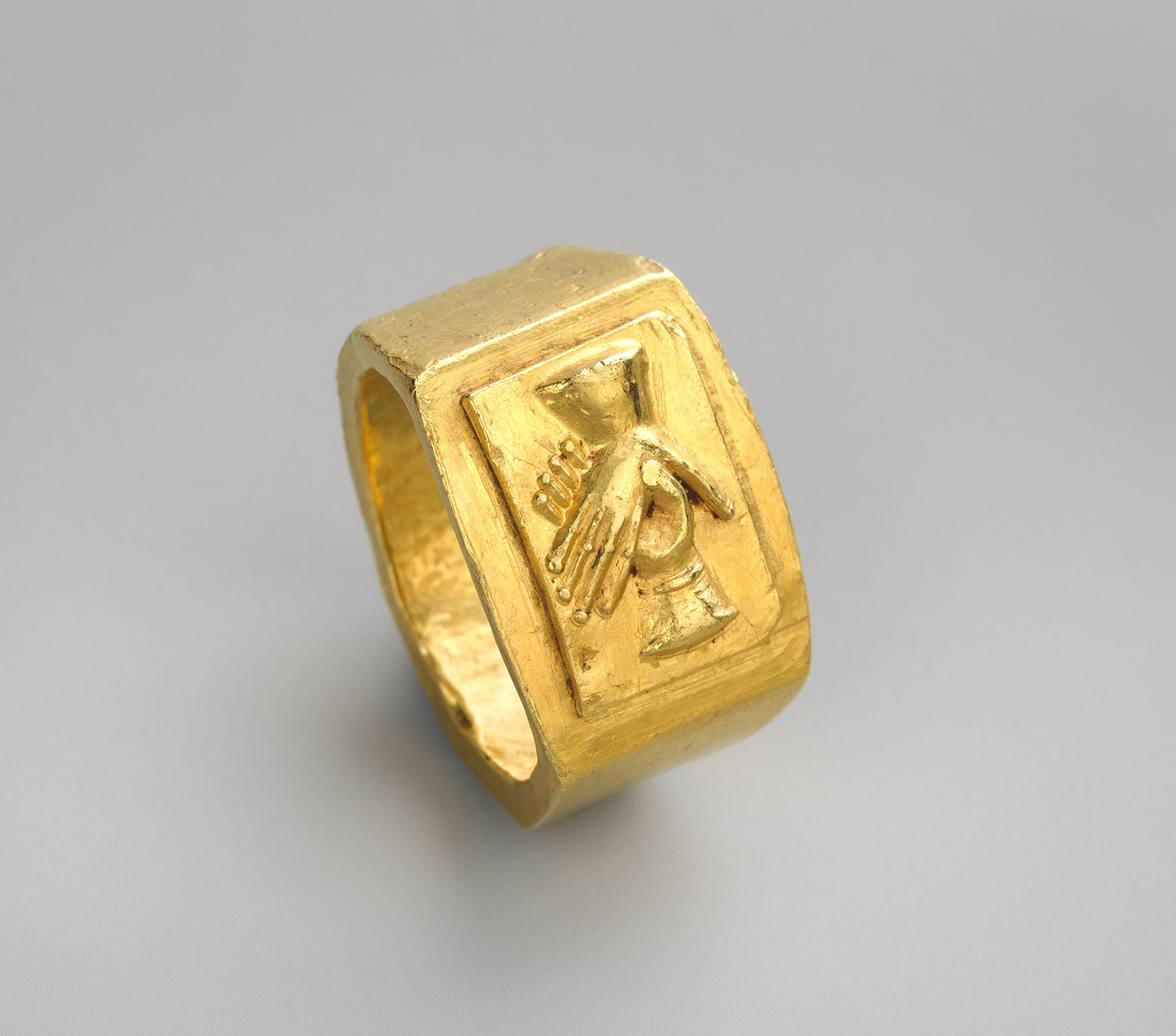
Ancient Egypt and Rome. The circle has long stood for eternity: no beginning and no end. The ancient Romans gave betrothal rings as a sign of a promise to marry. Early versions were often made of iron, and later ones of gold.
The ring finger. The tradition of wearing the ring on the fourth finger of the left hand comes from an old belief in a “vein of love,” the vena amoris, running straight from that finger to the heart. Anatomy doesn’t back that up, but I think it’s a lovely idea all the same.
The first famous diamond. In 1477, Archduke Maximilian of Austria gave Mary of Burgundy a ring set with diamonds. It’s often called the first recorded diamond engagement ring, and it set a trend among European royalty and nobility.
How Engagement Ring Styles Have Changed
Georgian and Victorian eras (1700s–1900). Rings were romantic and often sentimental. Think hand-carved gold, rose-cut diamonds, colored stones, and motifs like flowers, hearts, and snakes (a symbol of eternal love). Diamonds were cut by hand and lit by candlelight, so they had a soft, warm glow.
The solitaire arrives (1886). Tiffany & Co. introduced a six-prong setting that lifted a single diamond up above the band to catch the light. That simple solitaire is still one of the most popular styles today.
Edwardian and Art Deco (1900s–1930s). Platinum made delicate, lacy filigree possible. Then Art Deco brought bold geometry, step cuts like emerald and Asscher, and crisp, clean lines.
The diamond becomes “the” engagement stone (1940s). In 1947, De Beers launched its famous “A Diamond Is Forever” ad campaign. Within a generation, a diamond engagement ring went from a luxury to an expectation in America.
The 1980s and 1990s. In 1981, Princess Diana’s oval sapphire surrounded by diamonds reminded everyone that colored stones can be stunning. Yellow gold dominated the ’80s, and white metals took over in the ’90s and 2000s, along with halos and pavé bands.
What’s Trending Now
Today, the biggest trend is personal style. Couples are choosing what feels right to them rather than following a set of rules. Here’s what’s standing out:
1. Lab-grown diamonds. This is the biggest shift I’ve seen. According to The Knot’s latest Real Weddings Study, 61% of US couples chose a lab-grown diamond for their engagement ring in 2025, up from 52% in 2024, 46% in 2023, and just 12% in 2019.
2. Ovals and elongated shapes. Round is still the classic, but ovals have nearly caught up. In The Knot’s study, 26% of couples chose round diamonds, with oval close behind at 25%. Oval, emerald, marquise, and elongated cushion cuts are all popular because they look graceful on the hand and tend to appear larger than a round stone of the same weight.
3. Yellow gold is back. White metal settings still lead, but 39% of couples chose yellow gold, a 140% increase over five years. The ’80s would be proud.
4. Colored stones. Sapphires and moissanite are the most popular alternatives to diamonds. Celebrities like Lady Gaga, Anya Taylor-Joy, and Scarlett Johansson have worn pink, green, and brown center stones.
5. Bezel settings. In a bezel setting, metal fully wraps around the stone, and jewelers call it one of the most influential designs of 2026. I love these for active women because there are no prongs to snag.
6. Vintage and heirloom looks. Taylor Swift’s heirloom-style ring, set in a micro bezel instead of prongs, has inspired a wave of antique-inspired rings, with old mine cuts, engraving, and milgrain details.
7. East-west settings. When Zendaya showed off her horizontally set oval diamond in January 2025, she sparked a surge of interest in east-west rings, where the stone sits sideways across the finger.
8. Thick, sculptural bands and three-stone rings. Thick bands are one of the most prominent trends heading into 2026. Three-stone rings, which represent a couple’s past, present, and future, are getting fresh updates with unexpected gemstone pairings and asymmetrical arrangements.
Whatever the Style, Protect It
Here’s what hasn’t changed in thousands of years: an engagement ring is one of the most meaningful things we’ll ever own. Many will be passed down for generations.
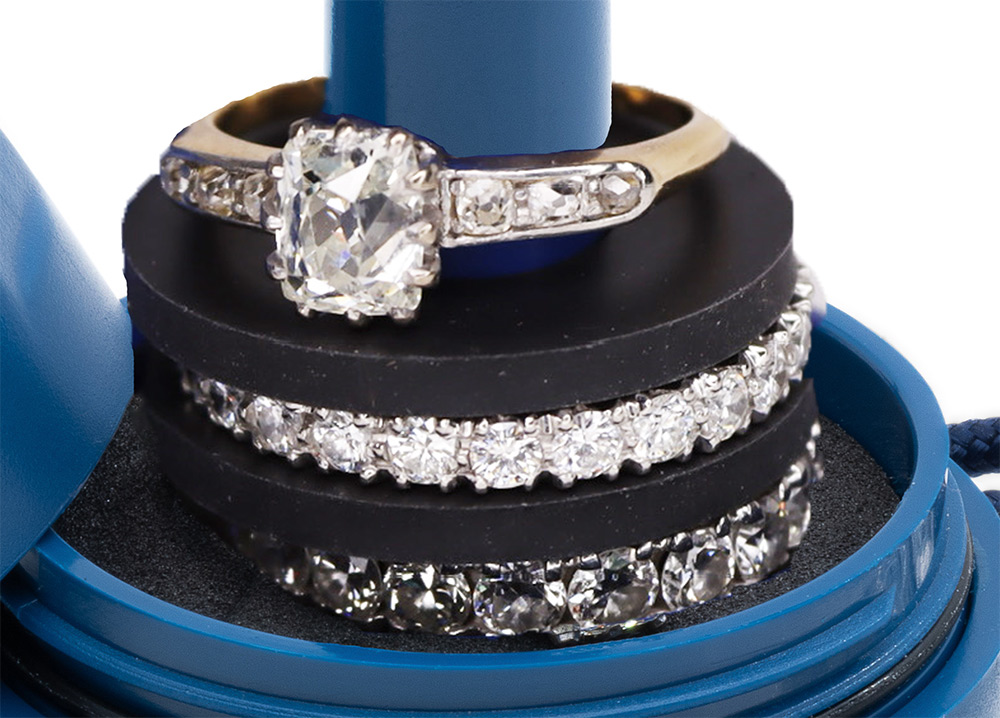
And it still has to come off sometimes: at the gym, the pool, the beach, when you’re cooking, or when you’re getting your nails done. (That’s actually where my own Ring Thing® story began.) I designed Ring Thing® so those moments don’t have to be stressful. It’s waterproof and airtight, with a padded base and silicone divider disks so rings don’t scratch each other, and it clips right to your bag.
The style of a ring may change with the times. How much it means to us doesn’t.
What does your engagement ring look like, and is there a story behind it? I’d love to hear it. And if you’re shopping for one right now, which trend are you drawn to?
Sources
- The Knot 2026 Real Weddings Study, via IDEX Online
- JCK: Lab-Grown Diamonds Take Command of the Engagement Ring Market
- Brilliant Earth: Engagement Ring Trends 2026
- Bustle: 2026’s Top Engagement Ring Trends
- Simon G: 4 Engagement Ring Trends Defining 2026
- Lily Arkwright: Engagement Ring Trends 2026