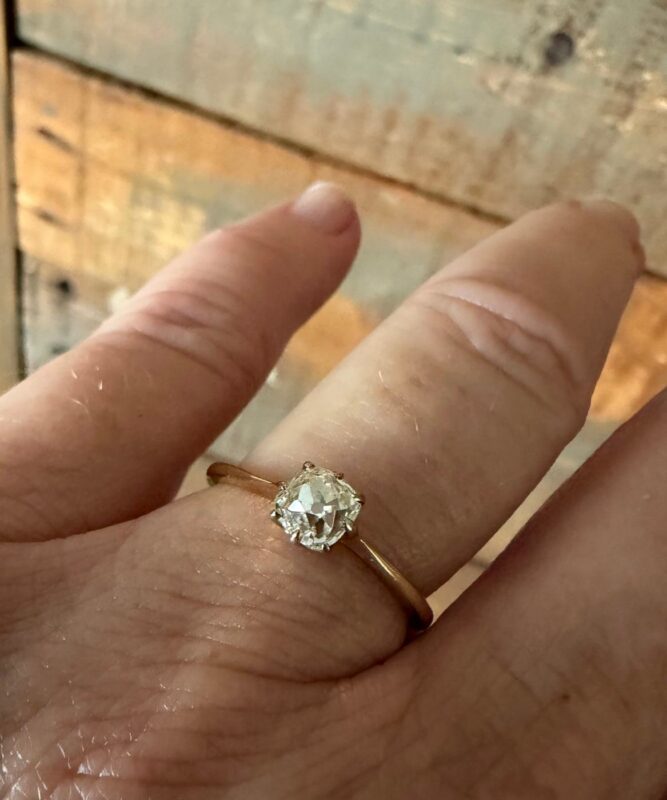
I’ve been noticing something lately. More of the engagement rings I see have small stones, sometimes a diamond not much bigger than a pinhead on a thin little band. I really like it.
Then I started reading the 2026 trend reports, and half of them say big diamonds are coming back. So I went down a bit of a rabbit hole to figure out what’s actually going on.
Which Way Is It Going?
The short answer is both.
Some jewelers say bigger center stones are back, the kind of big, flashy rings we saw a lot of in the early 2000s. Lab-grown diamonds are part of that, since they’ve made a larger stone much more affordable.
Other people in the industry are seeing the opposite. One jewelry designer pointed out that in Europe, dainty engagement rings are popular no matter how much money someone has. I didn’t know that, and I love it.
What most of them seem to agree on is that couples feel less pressure to follow the old rules. People are thinking about how a ring fits their life, their budget and their style, and then picking what they like.
Why Go Small?
I can think of plenty of good reasons.
A small, low stone is easier to live with. It doesn’t catch on sweaters or gloves or pull your hair. If you’re at the gym, climbing, gardening or working with your hands all day, that makes a difference.
For some couples, the stone has a story. Maybe it’s a grandmother’s diamond put into a new setting, or a colored stone that means something to the two of them. A story like that is worth more than an extra carat.
Then there’s money. A smaller ring can leave more for a house, a honeymoon or a dream you’re saving for. I started working on my first invention at 53, so I’ll always cheer for anyone putting money toward a dream.
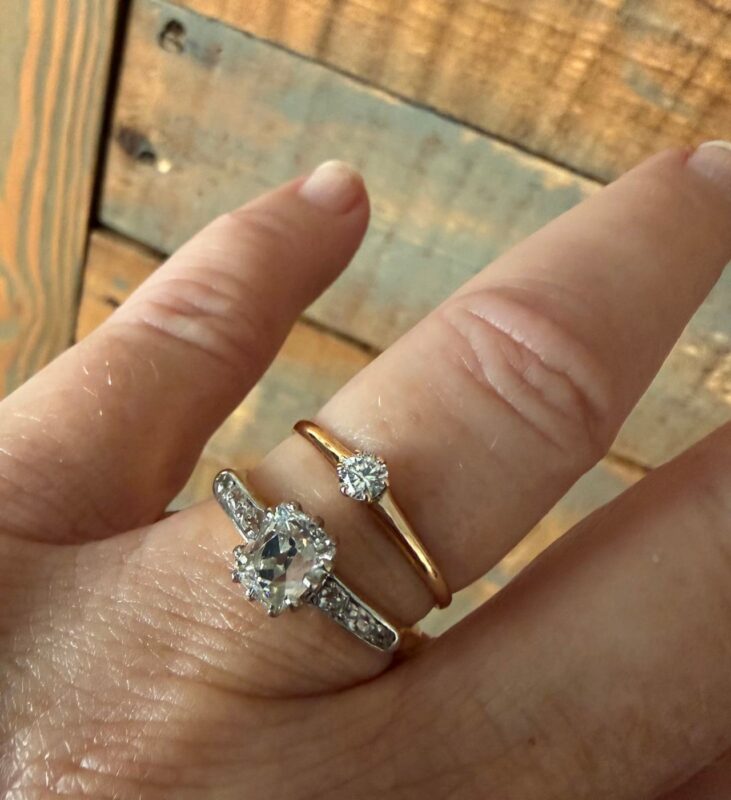
And sometimes it’s just taste. A dainty ring looks great stacked with a wedding band, and some people simply love delicate jewelry. That’s a good enough reason on its own.
Small Rings Need Extra Care
One thing worth knowing: small stones are easier to lose.
The prongs holding a tiny diamond are tiny too, and thin bands can bend. Some jewelers say the industry is moving away from micro-pavé bands because those little stones tend to come loose.
Big ring or small, most rings go missing when they’re off your finger. Think about how often you take yours off to get your nails done, work out, swim or wash dishes, and where it ends up when you do.
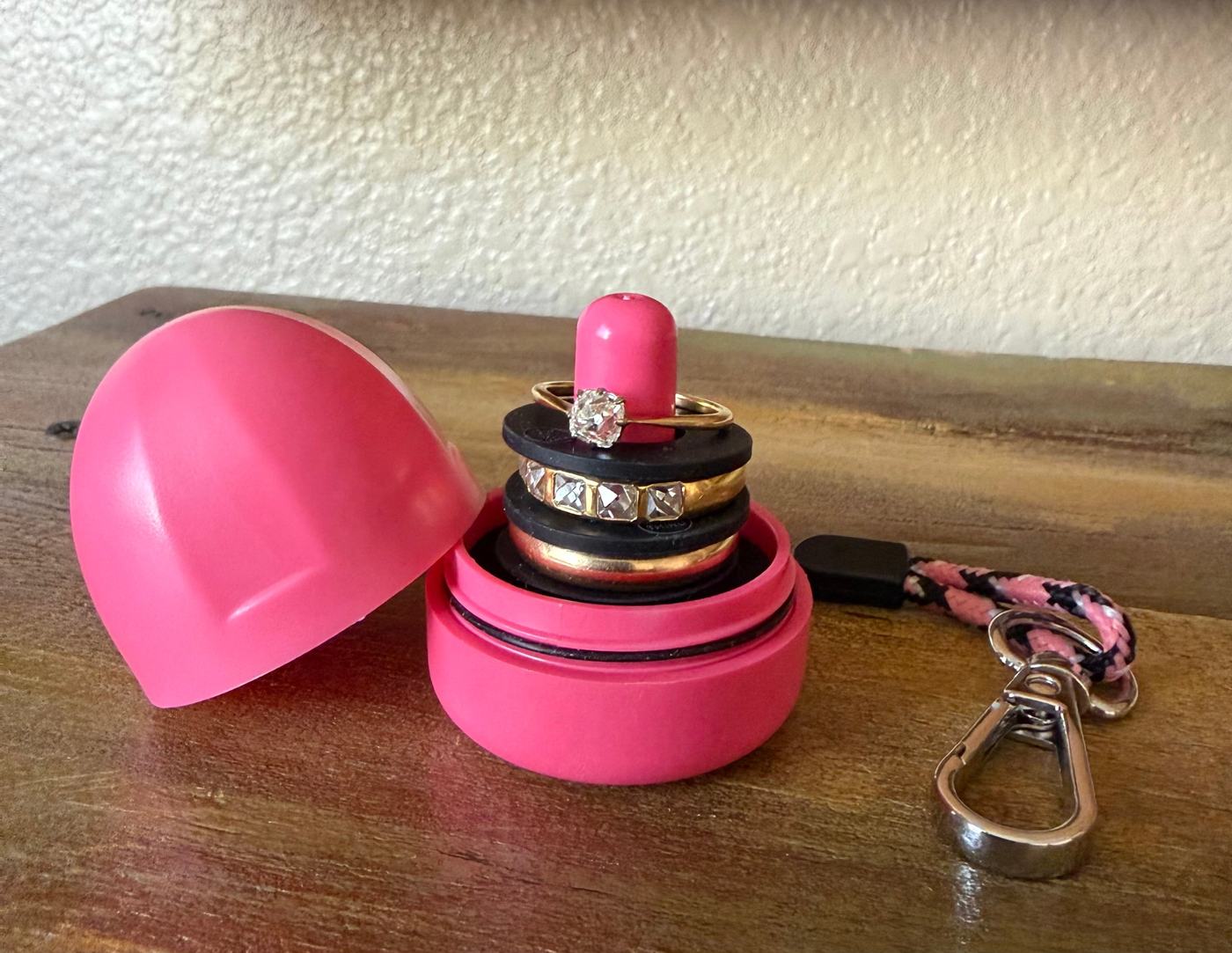
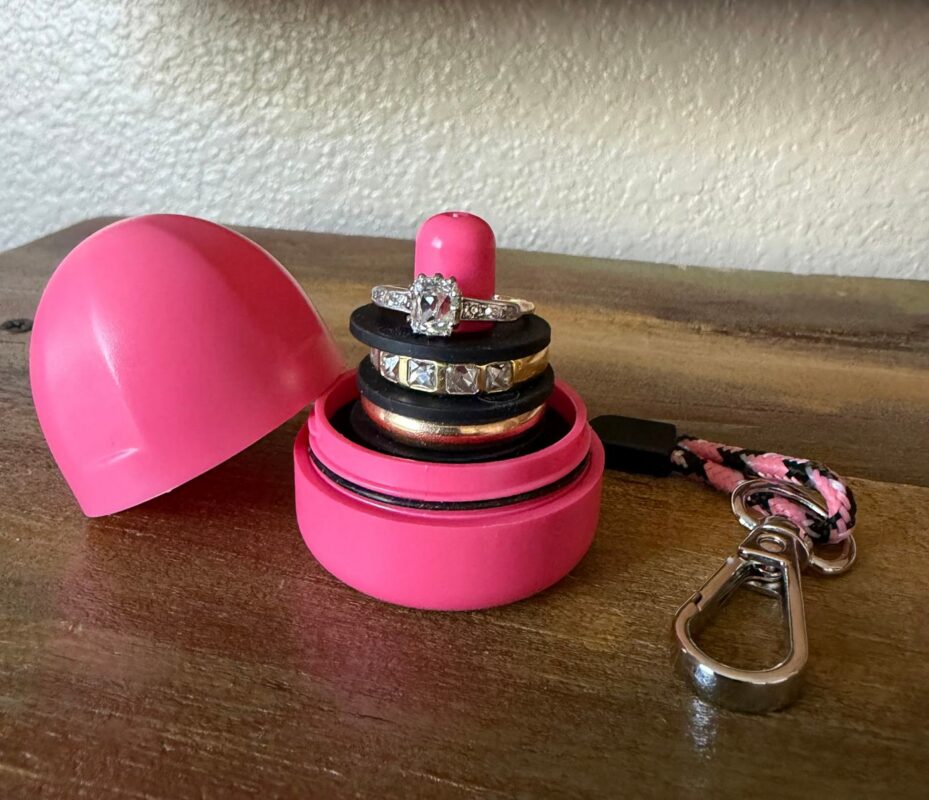
That’s where the Ring Thing® came from. I was sitting at a nail salon and realized I had no safe place to put my rings. It took years of work, but that moment led to a ring holder that’s waterproof, airtight and floats. There’s a padded base for your ring and patented silicone divider disks so stacked rings don’t scratch each other. It clips onto your bag, so your ring stays with you.
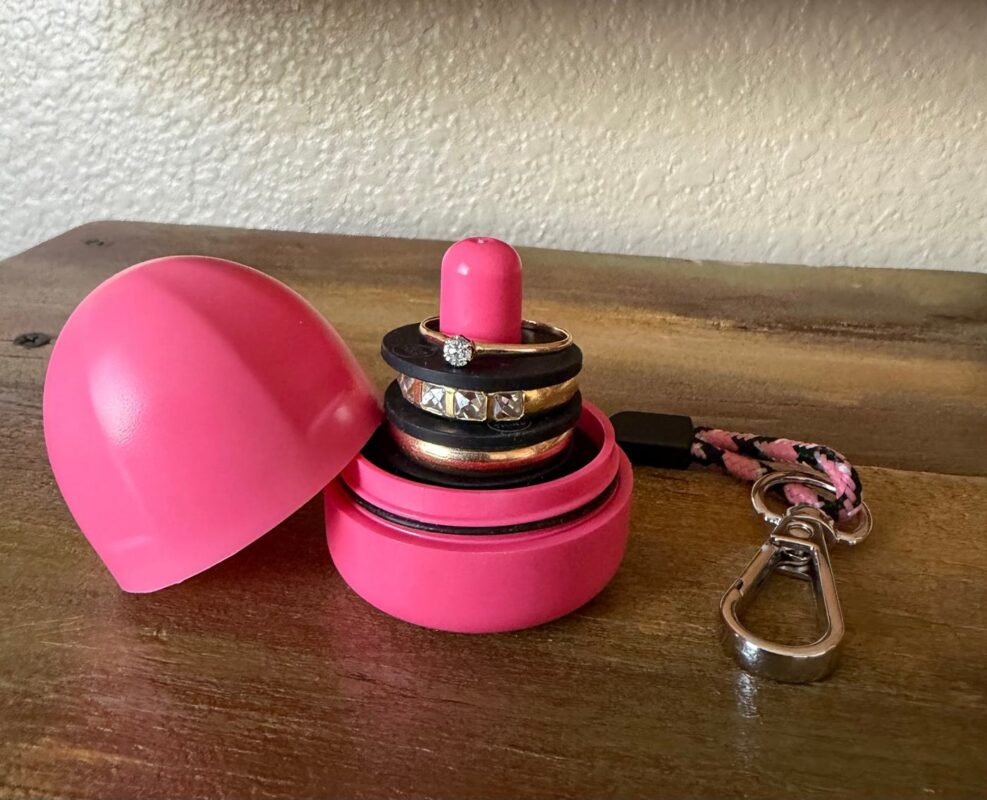
One of my favorite customer stories fits right in here. A man proposed out on a lake and used a Ring Thing as the ring box. His fiancée sent me the photos. He tied the Ring Thing to his fishing rod and then pulled it out of the lake! If you’re going to propose on the water, a ring box that floats seems like a smart choice.
Whatever You Choose
There’s no right size for an engagement ring. Pick the one you love, the one that feels like you, and take good care of it.
I’m curious what you opted for. Did you go big, small or somewhere in between? Tell me in the comments, or tag @ring_thing_ with a picture of your ring. I’d love to see it.